An illustrated field guide · 12 selected histories
Sculpture
through time.
Different places. Overlapping histories. A shared question: what can a material become?
Travel through objects, workshops, beliefs, and ways of seeing. These chapters offer points of entry, not a complete history or a single line of progress.
Explore the timelineRead across time
Many histories, at once.
Each bar marks a chapter’s approximate focus. Overlap means these histories share time, not that one caused another. Select a chapter to begin.
All 12 chapters
Bars use a linear year scale. Dates are approximate; chapter boundaries are editorial guides, not universal period divisions.
c. 3100–30 BCE
Ancient Egypt
Nile Valley
c. 1200–400 BCE
Olmec worlds
Gulf Coast, Mexico
c. 700–31 BCE
Greek antiquity
Mediterranean
c. 850–1279 CE
Chola bronzes
Tamil South India
c. 1000–1500 CE
Medieval Europe
European churches & courts
c. 1185–1333 CE
Kamakura portraiture
Japan
c. 1400–1600
Renaissance workshops
Italy & Europe
Focus: c. 1400–1897
The court of Benin
Edo kingdom, present-day Nigeria
c. 1600–1750
Baroque encounters
Europe
c. 1750–1880
Neoclassicism & identity
Europe & the Americas
c. 1880–1970
Modern experiments
Europe & international exchanges
c. 1960–present
Beyond the object
Multiple places & practices
01 / 12 · Nile Valley
Ancient Egypt
c. 3100–30 BCE
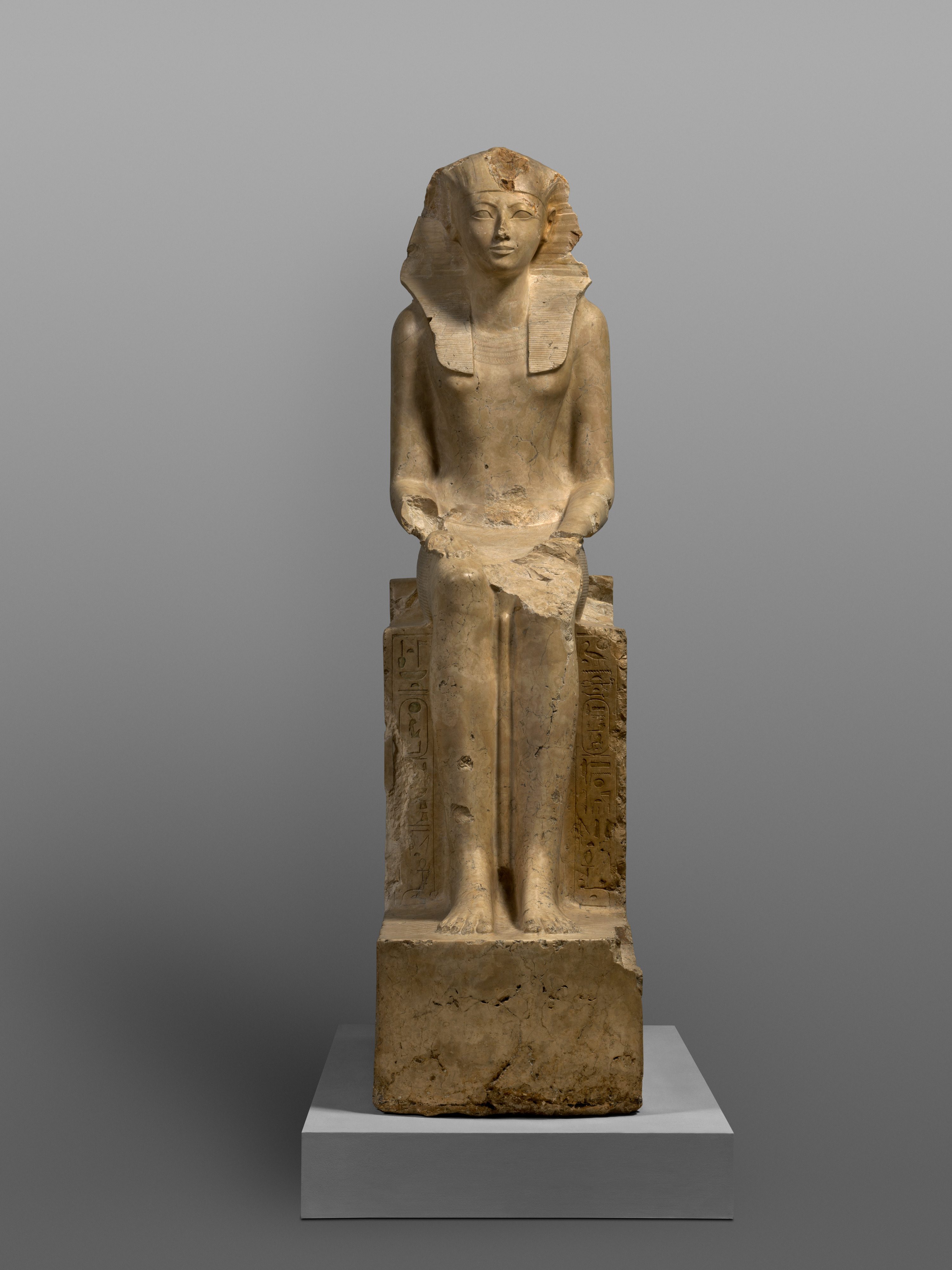
c. 1473–1458 BCE · Indurated limestone and paint
The Metropolitan Museum of Art · Rogers Fund, 1929. The Metropolitan Museum of Art
A body built to endure.
Sculpture could give authority and ritual a lasting physical presence. A royal image was more than a likeness: posture, clothing, scale, and inscriptions made the identity of a ruler legible.
Hatshepsut’s seated statue brings this into focus. The headcloth and kilt belong to the visual language of kingship, while inscriptions on the throne identify a female ruler. Surviving pigment reminds us that the pale stone we encounter today is only part of the original appearance. This New Kingdom object is one point within a much longer, changing history.
Three ways to look
- 01Follow the straight line from the head through the torso: the pose establishes a composed, frontal presence.
- 02Compare the formal royal clothing with the treatment of the face and body.
- 03Look for inscriptions and traces of colour. Stone sculpture was not necessarily intended to look monochrome.
Sources & further reading · 2
02 / 12 · Gulf Coast, Mexico
Olmec worlds
c. 1200–400 BCE
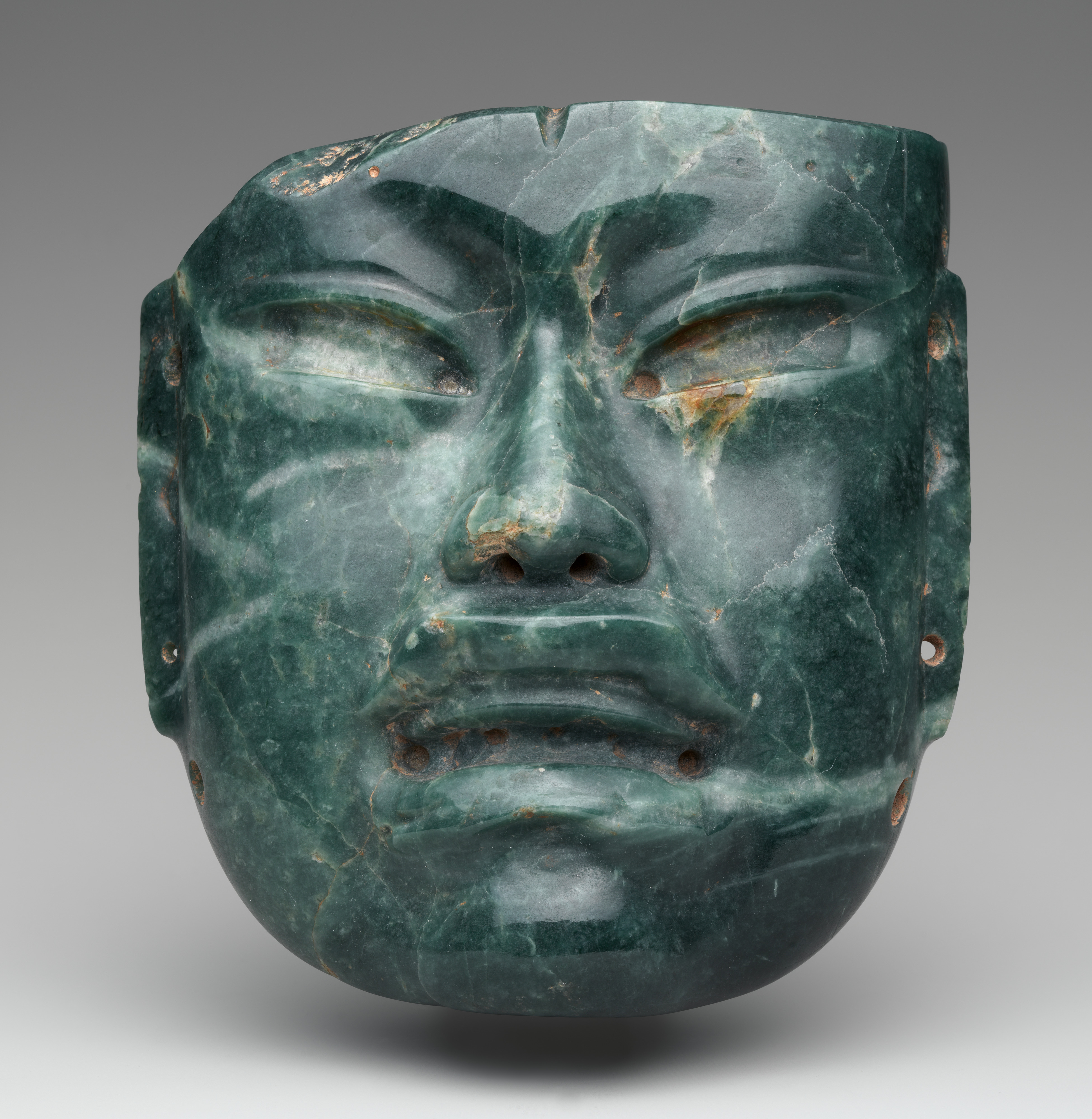
900–400 BCE · Jadeite
The Metropolitan Museum of Art · Bequest of Alice K. Bache, 1977 · Public domain
Monumental ideas, intimate objects.
Olmec makers worked across extraordinary differences of scale, from large volcanic-stone monuments to small greenstone carvings. Materials travelled, and carefully worked objects could carry meanings and histories far beyond their place of manufacture.
This jadeite face combines close observation with features associated with supernatural beings. Its smooth skin and parted lips conceal the effort of cutting a very hard stone. The Met connects the cleft in its forehead with maize imagery. Later Mesoamerican societies preserved and reused Olmec objects: a sculpture’s history did not end when its first makers were gone.
Three ways to look
- 01Compare the softly modelled nose and lips with the stone’s hard, polished surface.
- 02Find the cleft at the top of the forehead and the incised marks on the cheeks.
- 03Check the dimensions in the museum record: an image on a screen can make a small object seem monumental.
Sources & further reading · 2
03 / 12 · Mediterranean
Greek antiquity
c. 700–31 BCE
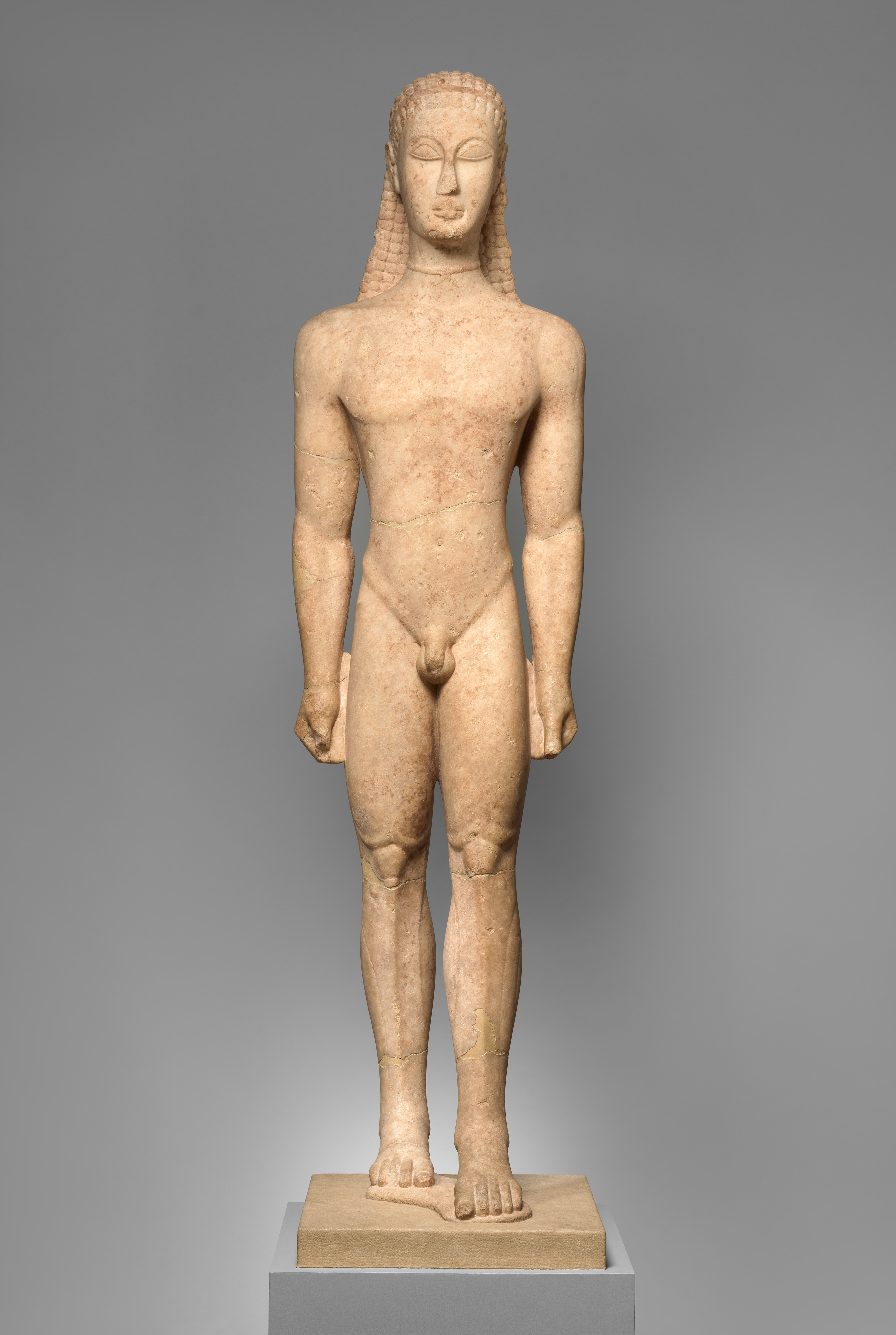
ca. 590–580 BCE · Naxian marble
The Metropolitan Museum of Art · Fletcher Fund, 1932. The Metropolitan Museum of Art
The standing figure becomes a question.
How can stone suggest a living body? The kouros makes that question visible through a repeated standing pose, patterned anatomy, and a figure carved free of the surrounding block.
This Attic youth marked an aristocratic grave. Its advanced left foot and frontal stance draw on Egyptian precedents, but its makers worked those conventions into their own sculptural language. Later Greek sculpture explored other kinds of balance and movement. The kouros belongs to the Archaic part of that story; it should not stand in for every Greek period or purpose.
Three ways to look
- 01Notice that stepping one foot forward is not the same as shifting the body’s weight onto it.
- 02Trace the repeated patterns in the knees, abdomen, and hair.
- 03Compare this standing figure with Hatshepsut: look for connections without treating either as an unfinished version of the other.
Continue with the collection
Related works · new publications appear when their period is identified

Sources & further reading · 1
04 / 12 · Tamil South India
Chola bronzes
c. 850–1279 CE
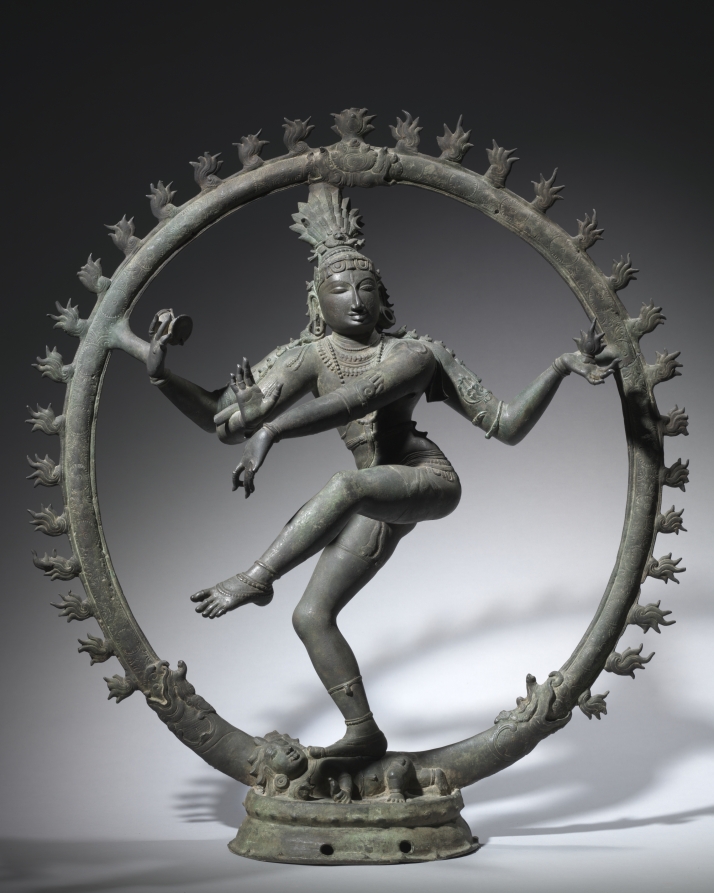
11th century · Bronze
Cleveland Museum of Art · Purchase from the J. H. Wade Fund
A divine image in motion.
The temple bronzes of Chola-period South India join carefully organised form with religious presence. Images could participate in worship and procession, extending the life of sculpture beyond a fixed architectural setting.
Shiva as Nataraja gathers gesture, rhythm, and attributes into a single figure. A ring of flames frames the dance while the arms and raised leg extend through the space inside it. Lost-wax casting makes this open, complex form possible. The work belongs to a living religious tradition; its movement and meaning cannot be reduced to a study of anatomy alone.
Three ways to look
- 01Follow the ring of flames before returning to the dancing figure at its centre.
- 02Look at the empty spaces between arms, torso, and lifted leg: they help organise the silhouette.
- 03Compare the branching cast-metal form with the more compact mass of a carved stone figure.
Sources & further reading · 2
05 / 12 · European churches & courts
Medieval Europe
c. 1000–1500 CE
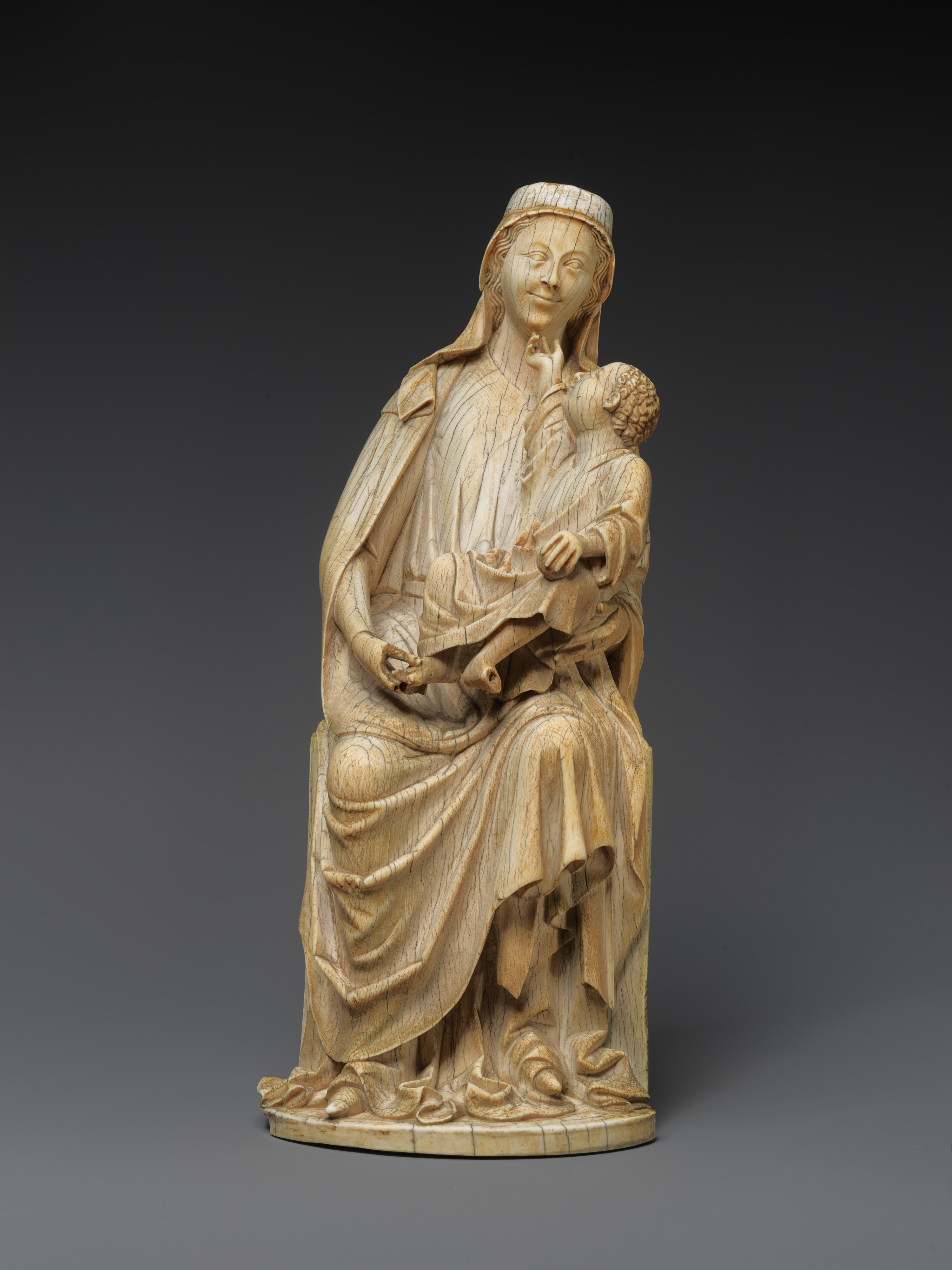
1404–10 · Vizille alabaster
Cleveland Museum of Art · Bequest of Leonard C. Hanna Jr.
Stone tells a story in a place.
Church portals, tombs, and devotional objects gave sculpture different audiences and scales. In Gothic buildings, teams of sculptors worked on ambitious programmes of figures and ornament; their movement between sites helped spread ideas.
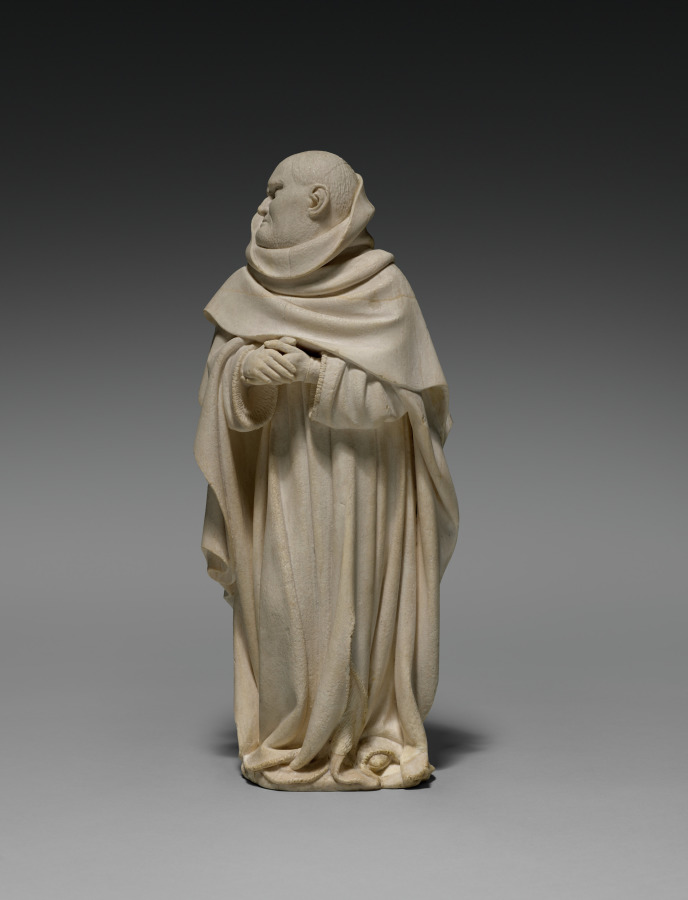
A mourner from the tomb of Philip the Bold offers a more intimate encounter. The small alabaster figure once belonged to a procession around a ducal tomb. Drapery does much of the expressive work, concealing the body and concentrating attention on folds and gesture. Seeing the figure alone in a museum changes the architectural and ceremonial relationships it originally had.
Three ways to look
- 01Follow the deep shadows between folds rather than searching only for a facial expression.
- 02Imagine a sequence of these small figures around the base of a much larger tomb.
- 03Compare a freestanding object with a portal figure: the intended setting changes how you approach it.
Continue with the collection
Related works · new publications appear when their period is identified

Sources & further reading · 2
06 / 12 · Japan
Kamakura portraiture
c. 1185–1333 CE
ca. 1295–1315 · Hinoki cypress, lacquer, metal staples and fittings
Cleveland Museum of Art · Leonard C. Hanna Jr. Fund
Spiritual lineage, a particular face.
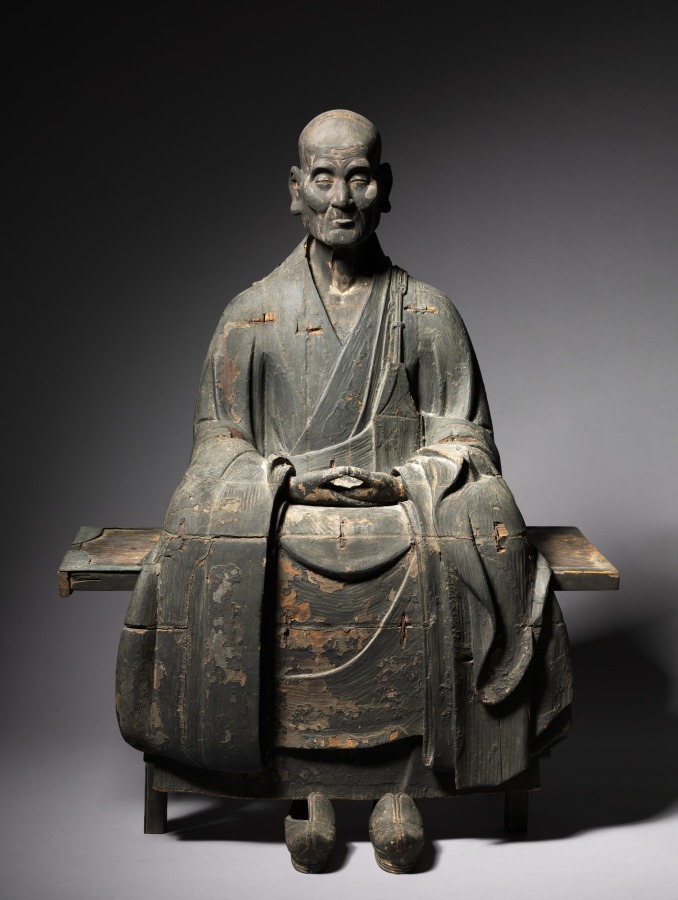
A portrait of a teacher can preserve a relationship as well as an appearance. This seated image of the Zen master Hottō Enmyō Kokushi brings a named religious figure into a tangible, bodily presence.
The Cleveland record dates the sculpture to around 1295–1315 and identifies cypress, lacquer, and metal fittings among its materials. The attention to the face sits alongside the broad organisation of the robes. Wood sculpture is a constructed and finished object: carving, joining, surface treatment, and the choice of pose all contribute to the encounter.
Three ways to look
- 01Compare the concentrated features of the face with the broad planes of the robes.
- 02Look at how the seated pose distributes the figure’s visual weight.
- 03Read the material list alongside the image: the finished surface does not reveal every part of its construction.
Sources & further reading · 1
07 / 12 · Italy & Europe
Renaissance workshops
c. 1400–1600
1432 · Fire-gilt high-copper alloy
The Metropolitan Museum of Art · Louis V. Bell Fund and others, 1983. The Metropolitan Museum of Art
Antiquity enters the workshop.
Renaissance sculpture emerged from workshops that brought inherited models into new settings. Cast-metal figures, carved marble, and glazed terracotta show how varied this period’s materials and ambitions could be.
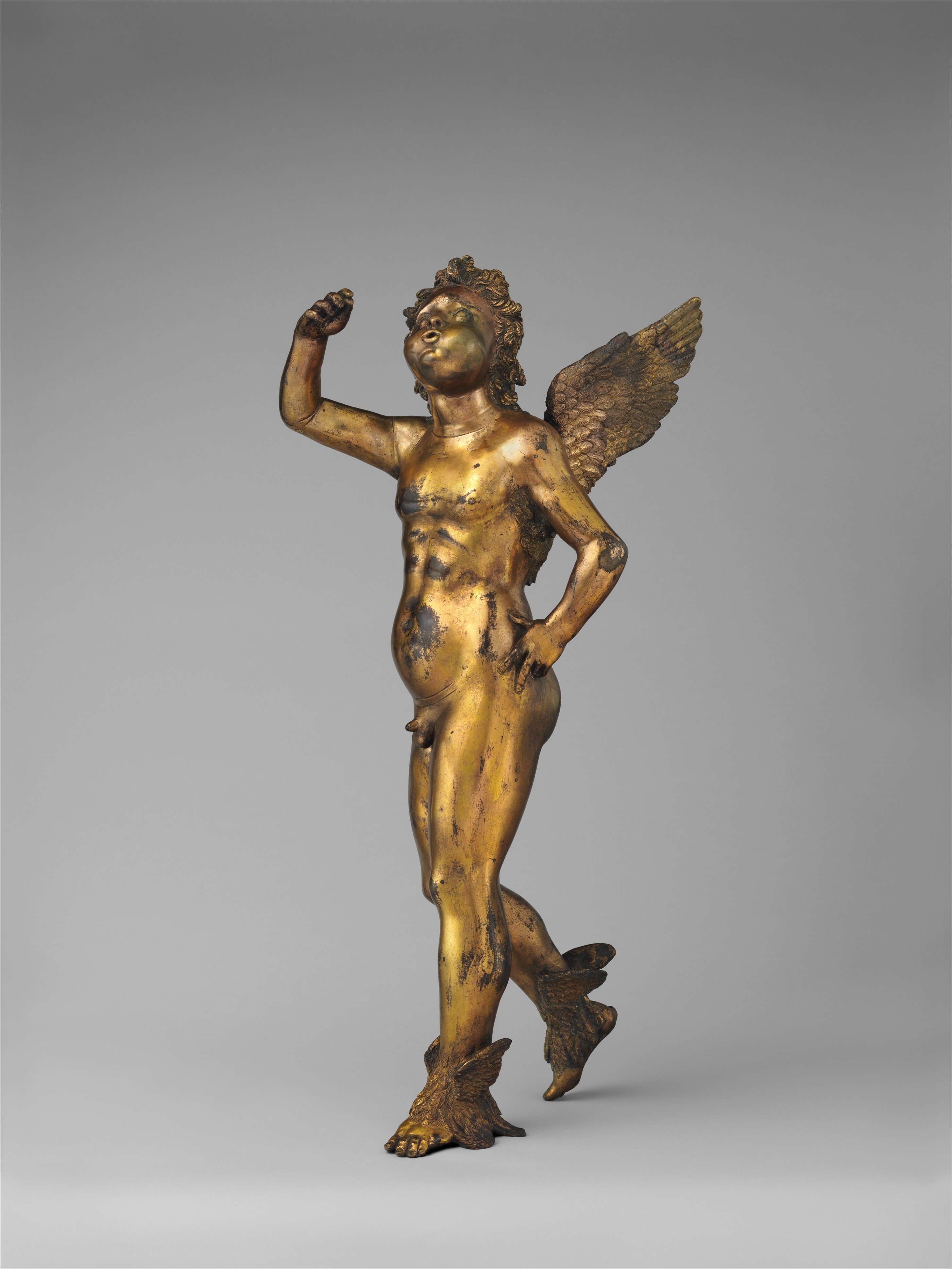
The fountain Sprite associated with Donatello’s circle joins a lively figure with a practical setting for flowing water. Elsewhere, the Della Robbia workshop developed glazed terracotta sculpture that made colour and the reflected light of a fired surface central to the work. A history focused only on white marble misses this experimentation with finish, production, and use.
Three ways to look
- 01Notice the Sprite’s wings, stance, and projecting limbs: the silhouette makes movement readable.
- 02Ask what changes when a sculpture is also part of a fountain.
- 03Compare metal, marble, and glazed clay before treating the Renaissance as a single visual style.
Continue with the collection
Related works · new publications appear when their period is identified

Renaissance
Art Institute of Chicago
Coronation Stone of Moctezuma Xocoyotzin
Maker unknown (Mexica, Aztec) Probably Tenochtitlan (now Mexico City), Mexico · c. 1503
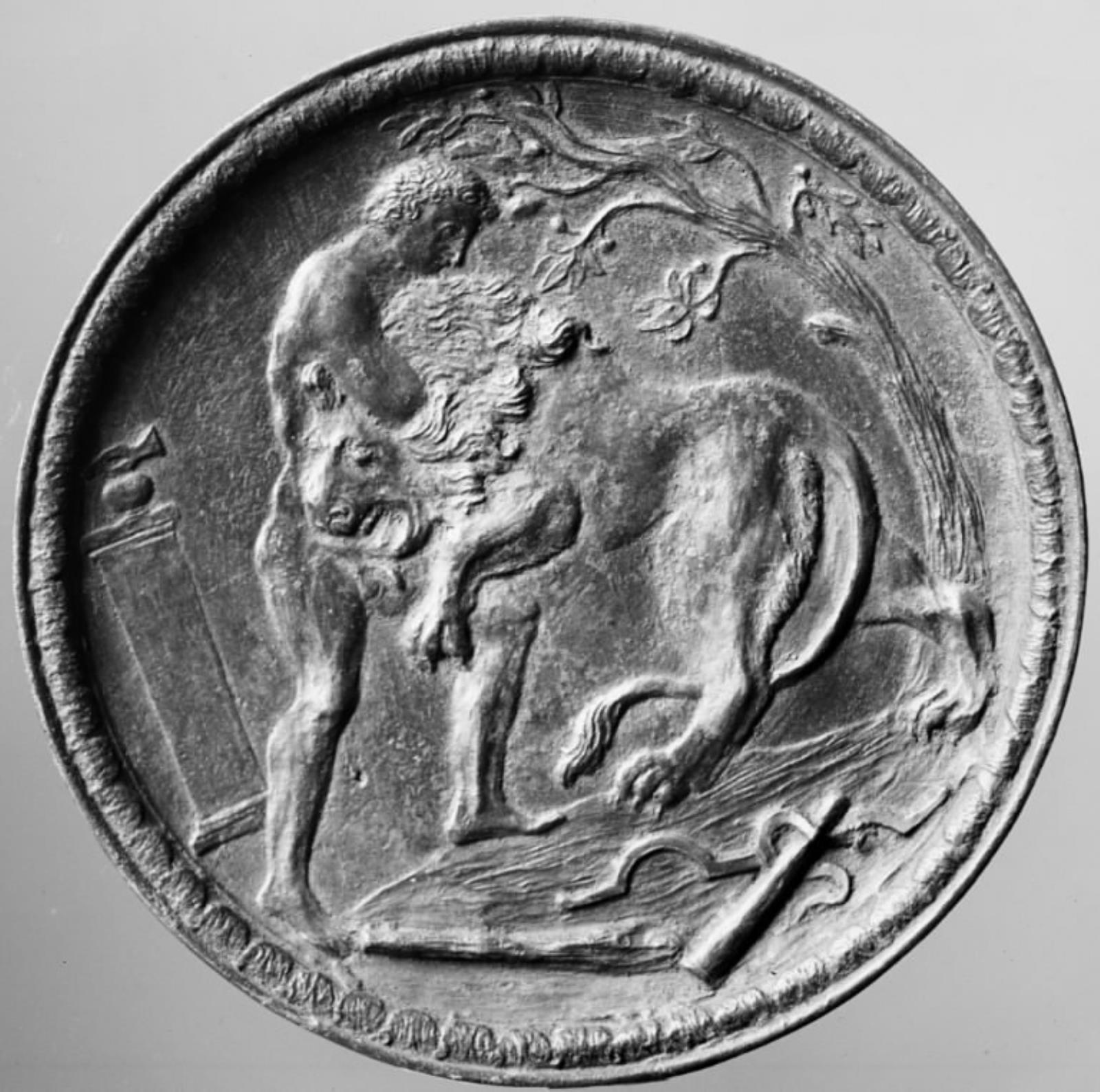
Renaissance
SMK — National Gallery of Denmark
Hercules and the Nemean Lion
Moderno · 1498-1502

Renaissance
Art Institute of Chicago
Grotesque Candelabra with Musical Sayrs and Relief Medallions
Daniel I Hopfer · c. 1505–1536, printed c. 1802
Sources & further reading · 2
08 / 12 · Edo kingdom, present-day Nigeria
The court of Benin
Focus: c. 1400–1897
Early 15th–mid-16th century · Brass, iron
The Metropolitan Museum of Art · The Michael C. Rockefeller Memorial Collection, Gift of Nelson A. Rockefeller, 1972 · Public domain
Memory cast for a royal altar.
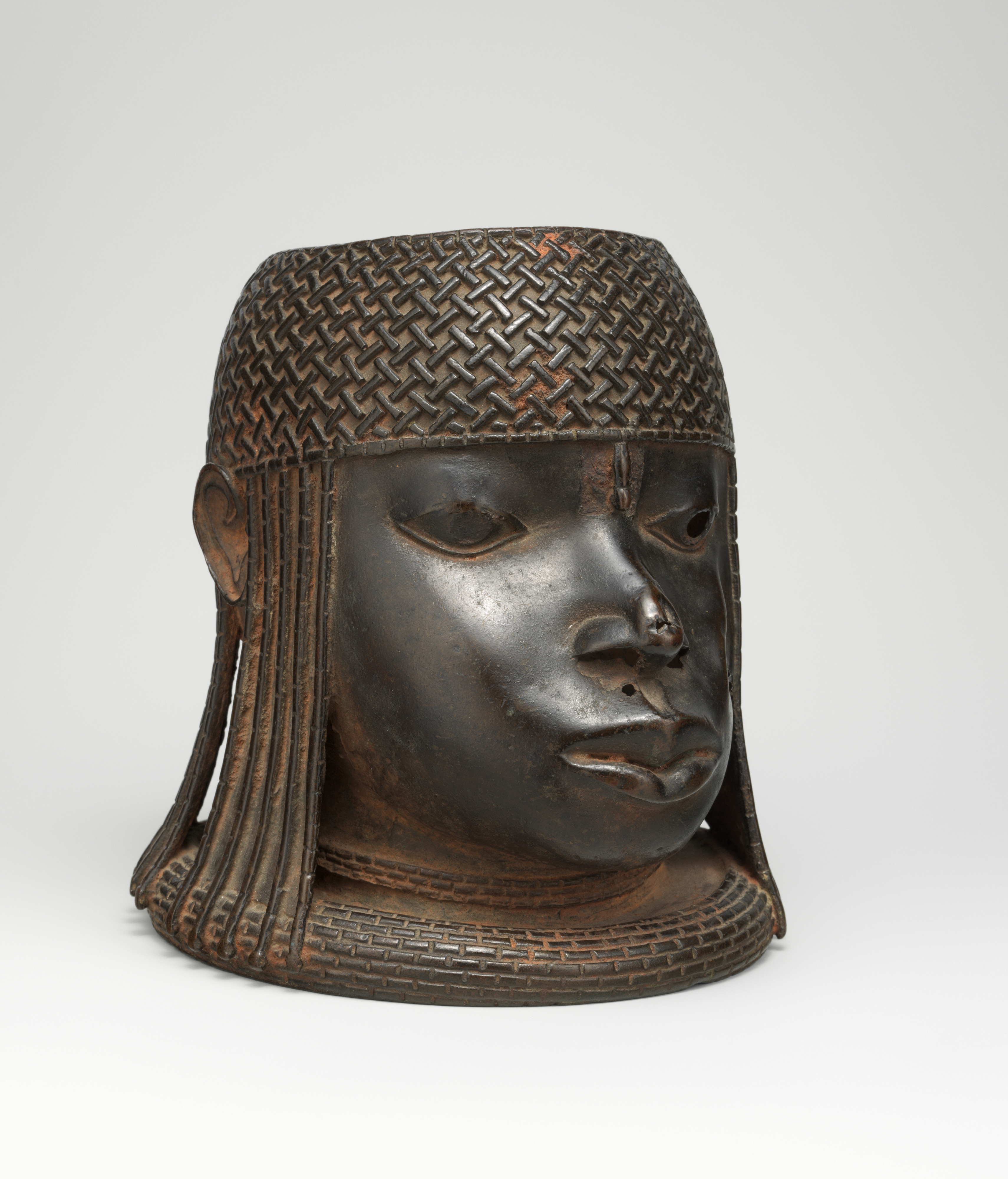
Brass-casting guild artists made works for the court of Benin, where sculpture articulated kingship, ancestry, and ceremonial relationships. A commemorative head was part of an altar setting rather than an isolated portrait bust.
The Met identifies this head of an ọ́bà as an early example, made between the early fifteenth and mid-sixteenth centuries. Its original place on a palace altar is essential to understanding it. The chapter’s endpoint marks the British invasion of 1897, not the end of Edo artistic traditions. Provenance and the histories of removal are part of reading these works today.
Three ways to look
- 01Study the repeated patterns of the headdress and collar around the face.
- 02Think about the head as one element of a larger altar arrangement.
- 03Open the provenance section of the museum record as well as the image: how an object travelled matters.
Sources & further reading · 1
09 / 12 · Europe
Baroque encounters
c. 1600–1750
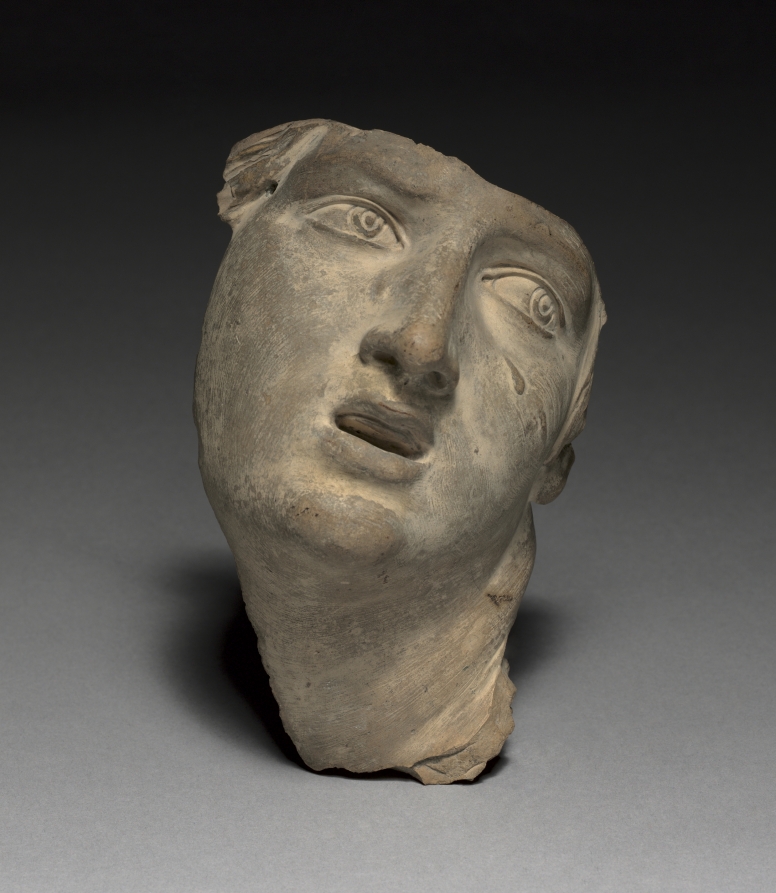
ca. 1616–17 · Marble
The Metropolitan Museum of Art · The Annenberg Fund and others, 1976. The Metropolitan Museum of Art
Marble becomes an event.
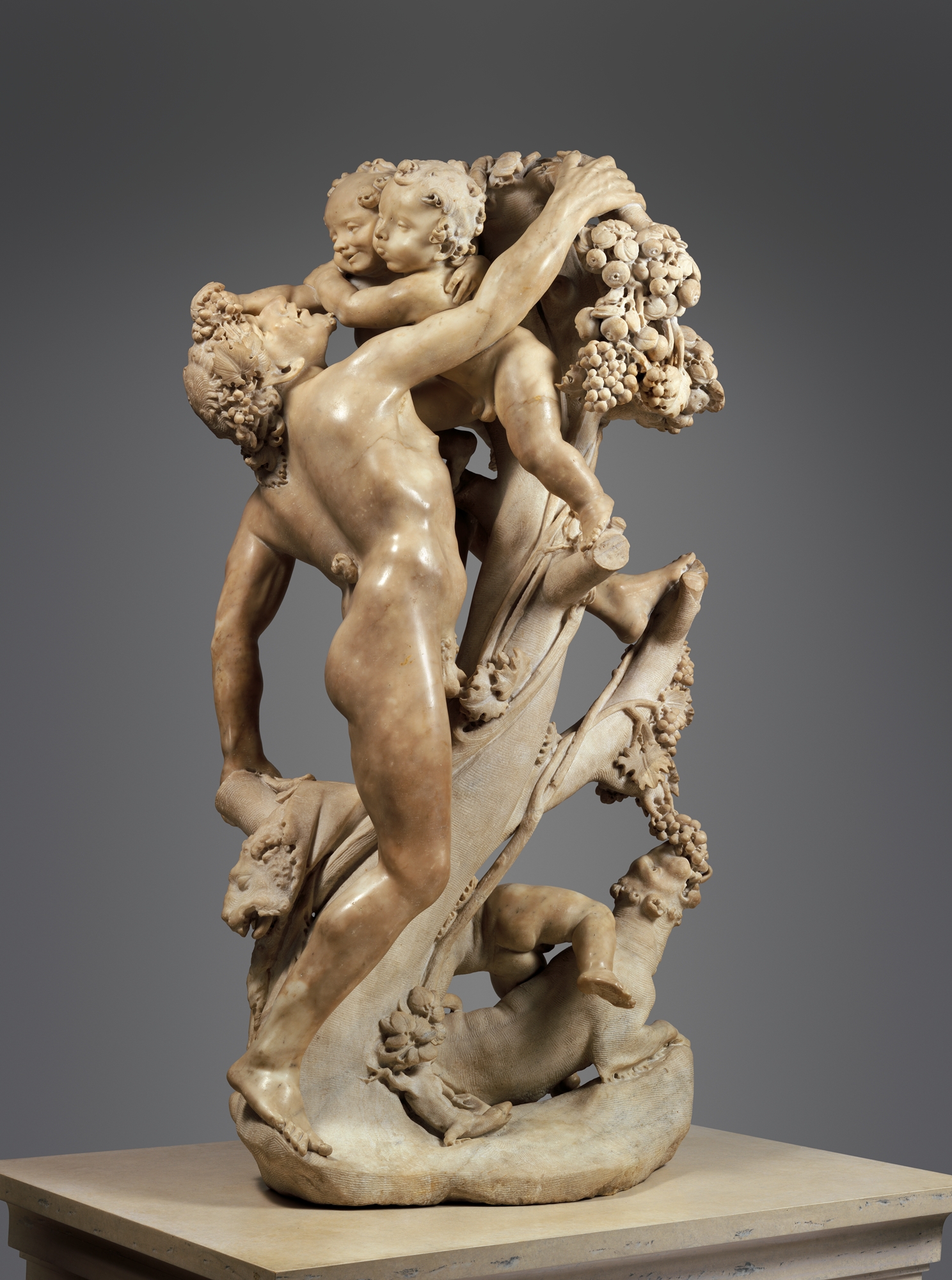
Twisting bodies and interlocking gestures invite a viewer to move around a sculptural group. In the Bernini family’s Bacchanal, the action is distributed across several figures rather than contained in one still pose.
The faun and children create a dense play of contact, imbalance, and competing directions. Such a group asks you to read sculpture over time: each viewpoint reveals another relationship. Its marble is a single material made to suggest different kinds of flesh, hair, and vegetation. The work provides one intimate entry into the larger theatrical ambitions associated with Baroque sculpture.
Three ways to look
- 01Trace a diagonal through the bodies, then find the gestures that interrupt it.
- 02Compare the treatment of skin, hair, and foliage within the same material.
- 03Imagine taking a step sideways: which figures would overlap, and which would emerge?
Continue with the collection
Related works · new publications appear when their period is identified
Sources & further reading · 1
10 / 12 · Europe & the Americas
Neoclassicism & identity
c. 1750–1880
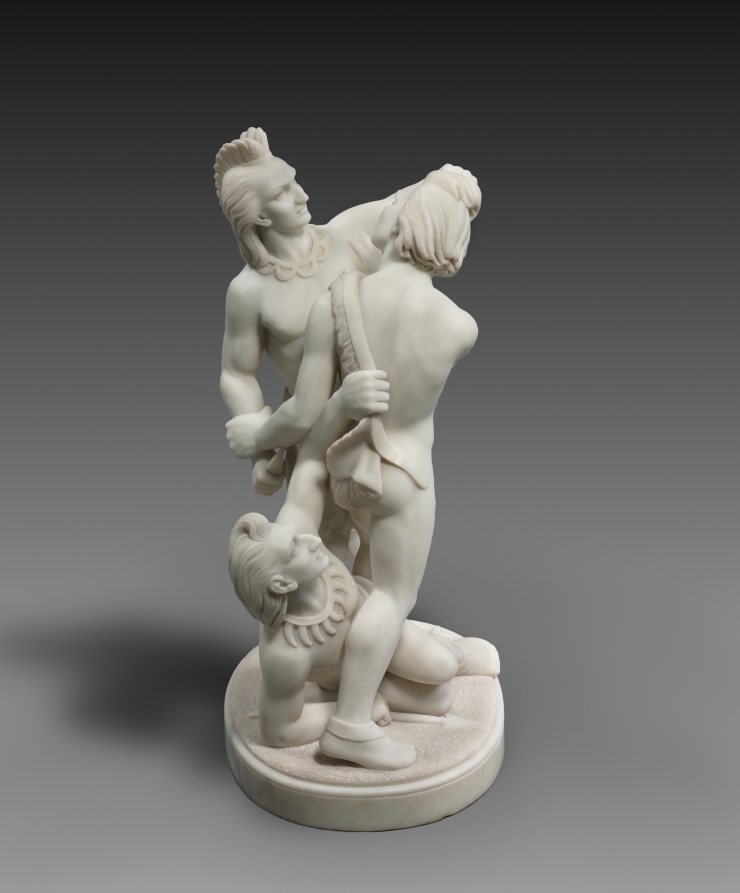
1868 · Marble
The Metropolitan Museum of Art · Morris K. Jesup and Friends of the American Wing Funds, 2015. The Met
An inherited language, new voices.
The portrait bust and the language of marble offered artists ways to work through questions of identity, literature, and public recognition. The same medium could serve very different subjects and careers.
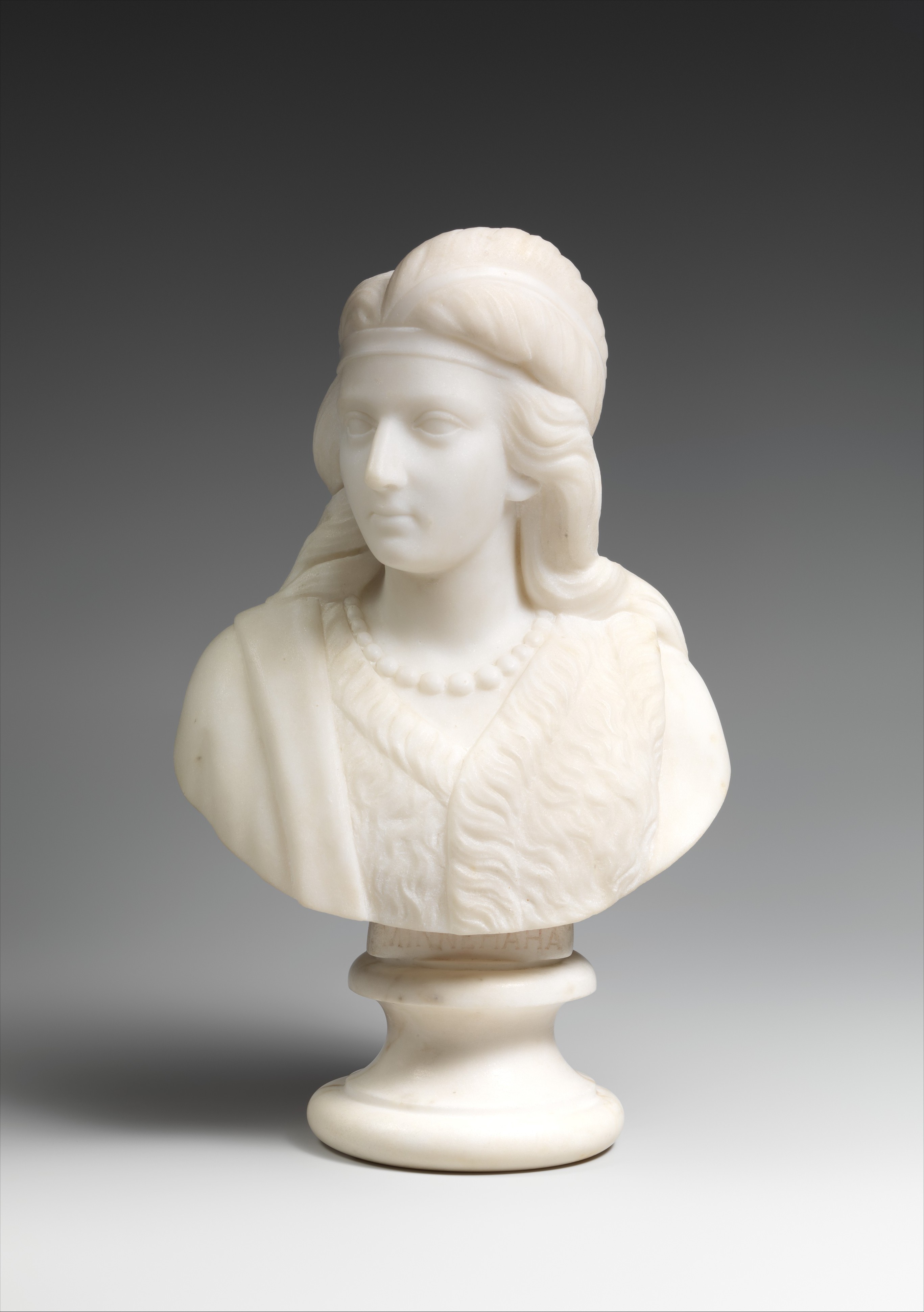
Edmonia Lewis’s Minnehaha, made in Rome in 1868, draws its subject from Longfellow’s poem. Lewis’s career crosses the Atlantic and complicates a history told only through European masters. Look at the sculpture as both a carefully shaped marble object and a work with a named literary subject. Neither the material nor the style supplies the whole meaning on its own.
Three ways to look
- 01Follow the silhouette of the bust before moving to details of the face and hair.
- 02Compare the carved surfaces that suggest skin with those that suggest clothing or adornment.
- 03Read the title and artist’s history beside the image: what do they add that the photograph cannot tell you?
Continue with the collection
Related works · new publications appear when their period is identified

Sources & further reading · 1
11 / 12 · Europe & international exchanges
Modern experiments
c. 1880–1970
modeled 1880 or 1881; cast 1910 · Bronze
The Metropolitan Museum of Art · Gift of Thomas F. Ryan, 1910. The Metropolitan Museum of Art
Let the surface show the making.
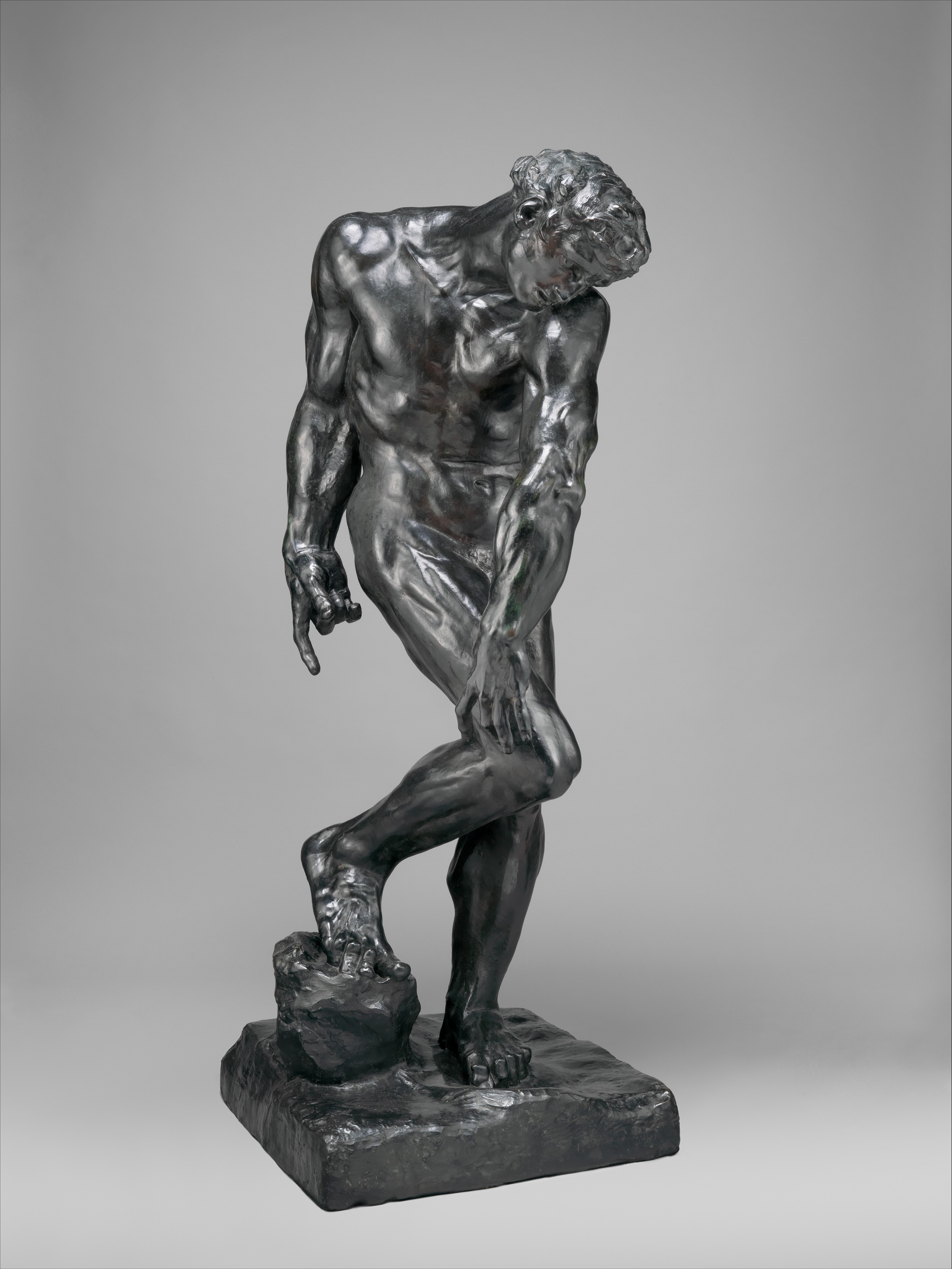
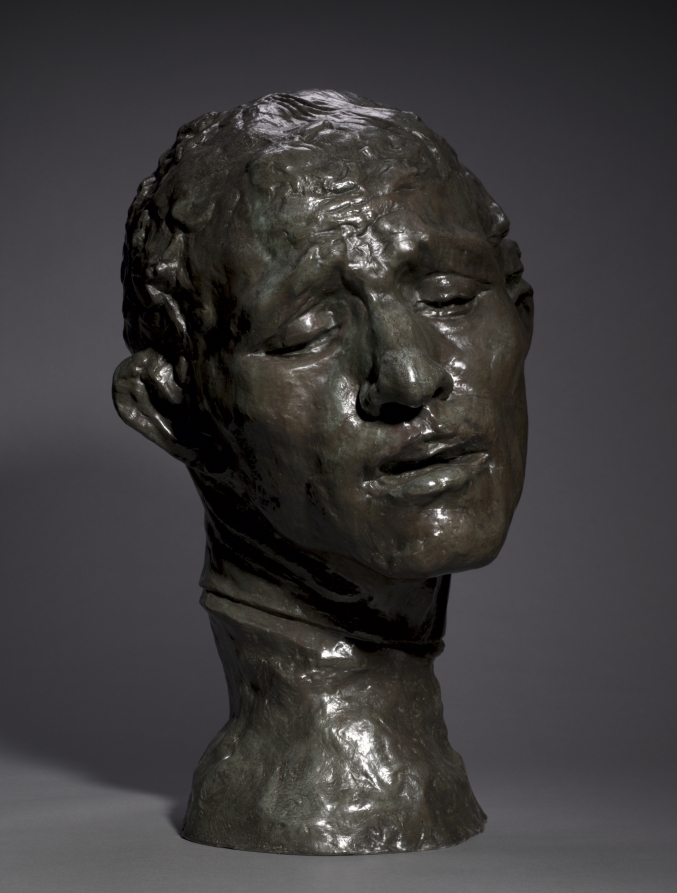
Rodin’s figures make modelling, gesture, and bodily tension central to the encounter. A bronze can preserve the irregularities of a model rather than conceal them beneath an ideal finish.
Adam offers a starting point, not a complete definition of modern sculpture. Other makers would investigate fragmentation, abstraction, industrial form, and the relationship between a work and its surroundings. Boccioni’s experiments, for example, pursued the relation of form to movement. Compare the dates of a model and its cast: a later bronze edition does not automatically belong to the period in which it was poured.
Three ways to look
- 01Watch how highlights break across an uneven bronze surface.
- 02Compare the body’s gesture with the direction of its gaze and the weight carried by its legs.
- 03Read model and casting dates separately when a museum records both.
Continue with the collection
Related works · new publications appear when their period is identified


Sources & further reading · 2
12 / 12 · Multiple places & practices
Beyond the object
c. 1960–present
A way of reading · diagram
Object + place + viewer
An encounter.
What if the space is part of the work?
Installation expands attention from an individual object to an arrangement, a site, or an experience. Mixed materials can occupy a room and ask visitors to walk through or around them.
This is one strand of contemporary practice, not a replacement for carving, modelling, or casting. When approaching an installation, ask what belongs to the work: its objects, the distance between them, the light, the location, or the route you take. The diagram here is a reading aid, not a photograph of an artwork. Follow the source for documented examples and their artists.
Three ways to look
- 01Locate your own position: are you outside the work, beside it, or within it?
- 02Notice whether movement changes the relationships between its parts.
- 03Ask whether the installation could move to another site without becoming a different encounter.
Continue with the collection
Related works · new publications appear when their period is identified
Contemporary
Victoria and Albert Museum
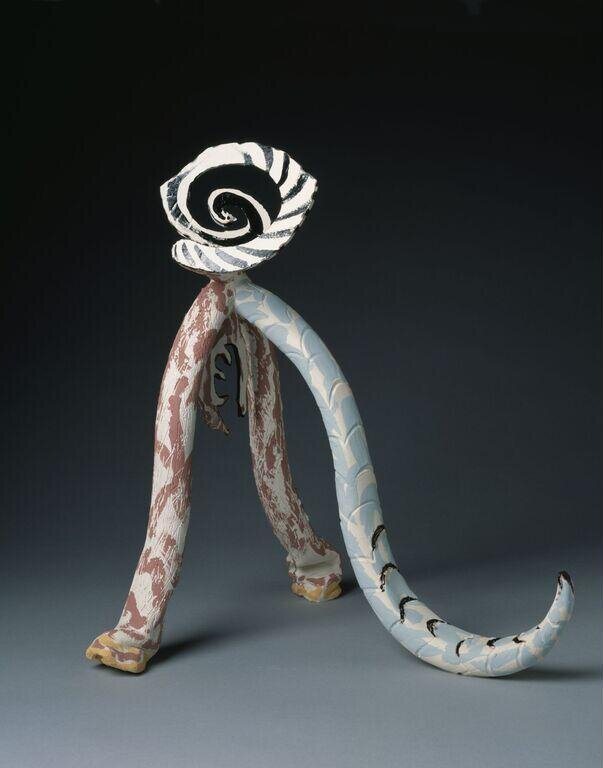
Hermaphrodite Self Portrait
Hambling, Maggi · 1993
Contemporary
Victoria and Albert Museum
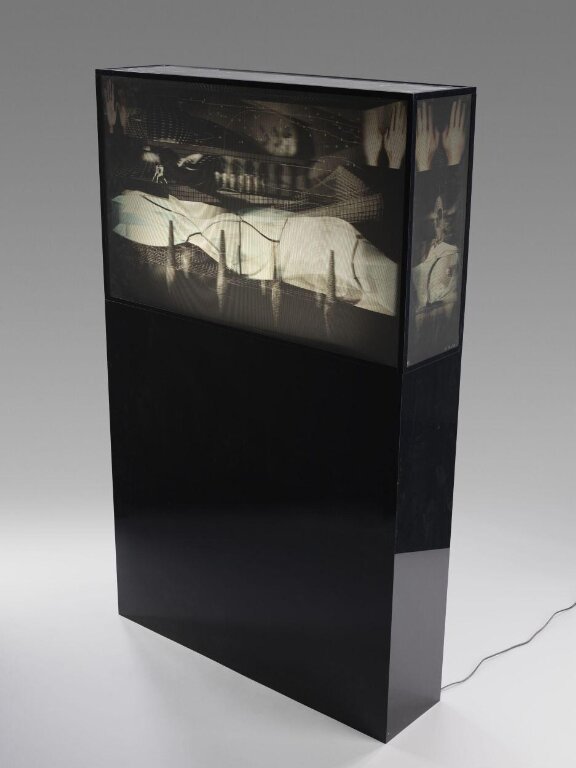
Sculpture, 'Townhouse: Revisited', PHSCologram sculpture, by Ellen Sandor & (art)n, 1999.
Sandor, Ellen · 1999
Contemporary
Victoria and Albert Museum
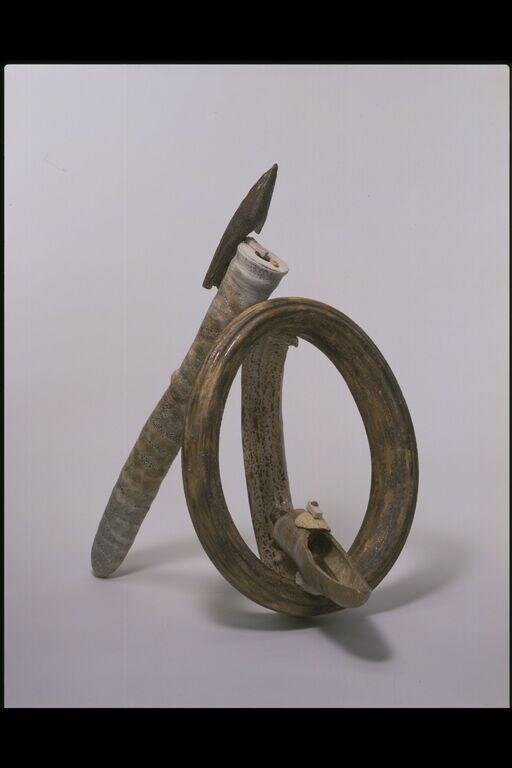
Untitled Sculpture
Inoue, Masayuki · 1993
Sources & further reading · 1
Keep looking
History is also what an object carries with it.
Dates, attributions, and interpretations can change with research. Follow the museum records for provenance and current scholarship. This selection will grow; its gaps should remain visible.
Explore the collection