
An independent field guide to sculpture
Matter,
made human.
Explore 5,000 years of bodies, monuments, materials, and ideas—through museum records, close looking, and the people who shaped them.
Enter the collectionToday’s collection spotlight
Look closer. Every surface remembers a hand.
Our object pages bring collection records together with concise visual histories, material details, and direct links back to the museum source.
Study this objectRomanticism · Bronze
Python Killing a Gazelle
Antoine-Louis Barye
Barye compresses a violent animal encounter into a low, coiling mass. The snake’s continuous curve and the gazelle’s arrested limbs turn close observation into Romantic drama, while casting preserves the minute textures of the modeled surface.
- Date
- 19th century
- Material
- Bronze
- Scale
- 15.5 × 39.5 cm
The index
Start with a maker
Meet sculptors from across the collection, including newly added museum-linked profiles.
Meet every artist

History in objects
Across places and centuries.
Explore an illustrated timeline of overlapping histories, from ancient workshops to contemporary encounters.
Open the timelinec. 3100–30 BCE
Ancient Egypt
Sculpture could give authority and ritual a lasting physical presence. A royal image was more than a likeness: posture, clothing, scale, and inscriptions made the identity of a ruler legible.
c. 1200–400 BCE
Olmec worlds
Olmec makers worked across extraordinary differences of scale, from large volcanic-stone monuments to small greenstone carvings. Materials travelled, and carefully worked objects could carry meanings and histories far beyond their place of manufacture.
c. 850–1279 CE
Chola bronzes
The temple bronzes of Chola-period South India join carefully organised form with religious presence. Images could participate in worship and procession, extending the life of sculpture beyond a fixed architectural setting.
c. 1185–1333 CE
Kamakura portraiture
A portrait of a teacher can preserve a relationship as well as an appearance. This seated image of the Zen master Hottō Enmyō Kokushi brings a named religious figure into a tangible, bodily presence.
Focus: c. 1400–1897
The court of Benin
Brass-casting guild artists made works for the court of Benin, where sculpture articulated kingship, ancestry, and ceremonial relationships. A commemorative head was part of an altar setting rather than an isolated portrait bust.
c. 1600–1750
Baroque encounters
Twisting bodies and interlocking gestures invite a viewer to move around a sculptural group. In the Bernini family’s Bacchanal, the action is distributed across several figures rather than contained in one still pose.
c. 1880–1970
Modern experiments
Rodin’s figures make modelling, gesture, and bodily tension central to the encounter. A bronze can preserve the irregularities of a model rather than conceal them beneath an ideal finish.
c. 1960–present
Beyond the object
Installation expands attention from an individual object to an arrangement, a site, or an experience. Mixed materials can occupy a room and ask visitors to walk through or around them.
Across the collections
Different places. Shared curiosity.
Latest publication: 15 September 2026. A rotating selection across museum countries; browse the index for every new arrival.
Browse all objects
Hellenistic Antiquity
The Walters Art Museum
Copy of the Aphrodite of Knidos
Roman sculptor, after Praxiteles · 3rd–2nd century BCE
Renaissance
SMK — National Gallery of Denmark
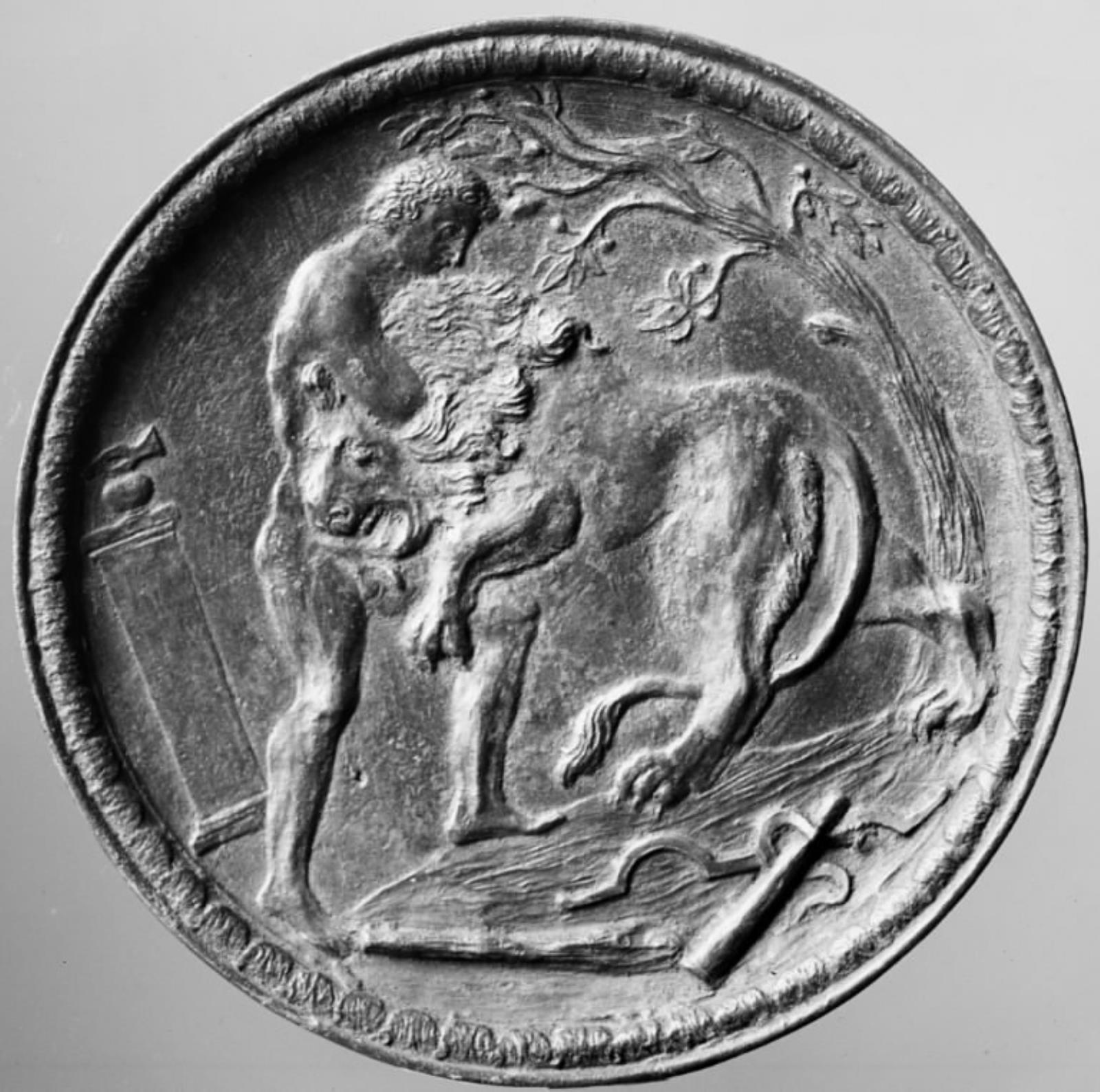
Hercules and the Nemean Lion
Moderno · 1498-1502
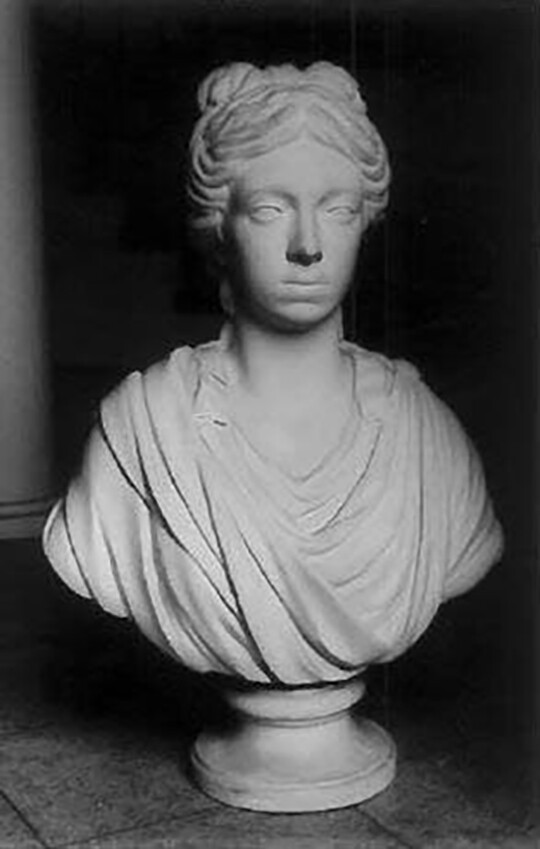
Long nineteenth century
Freies Deutsches Hochstift / Frankfurter Goethe-Museum
Büste der Herzogin Luise von Sachsen-Weimar-Eisenach
Martin Gottlieb Klauer · 1783
Material intelligence
How form is made
Follow an object from block, wax, clay, or found part through the decisions that give it weight and presence.
Marble carving
A subtractive practice in which point, tooth, rasp, and abrasive reveal form from stone.
Learn the processLost-wax casting
A model is translated into metal through wax, investment, heat, and a carefully controlled pour.
Learn the processClay modeling
An additive, responsive process that records pressure, revision, and the movement of the hand.
Learn the processThe journal
Stories behind the surface
Daily museum-record briefs and source-led essays exploring objects, materials, and their histories.
Read the journal
Museum record brief
From the collection: Terracotta figuring of a standing female votary holding a box
Discover Terracotta figuring of a standing female votary holding a box in the The Metropolitan Museum of Art collection, through its recorded maker, date and materials.
15 September 2026 · 2 min read

Museum record brief
From the collection: Limestone statue of a sphinx
Discover Limestone statue of a sphinx in the The Metropolitan Museum of Art collection, through its recorded maker, date and materials.
14 September 2026 · 2 min read

Museum record brief
From the collection: Terracotta statuette of an actor
Discover Terracotta statuette of an actor in the The Metropolitan Museum of Art collection, through its recorded maker, date and materials.
13 September 2026 · 2 min read
See it in person
Plan a sculpture day
Launch listings focus on permanent collections and link directly to the venue. Always confirm display status before visiting.
Open the visit guidePermanent collection
Rodin in the European Sculpture Galleries
The Metropolitan Museum of Art · New York
Venue record
Collection focus
Indian and Southeast Asian Sculpture
Cleveland Museum of Art · Cleveland
Venue record
Collection focus
Ancient Mediterranean Sculpture
The Walters Art Museum · Baltimore
Venue record