Antiquity · Cleveland Museum of Art · 1920.1978
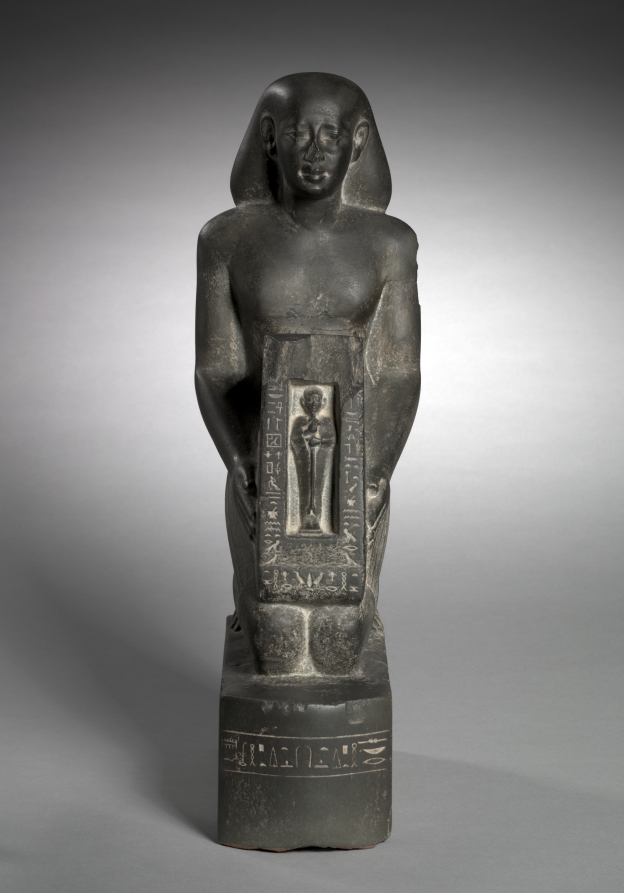
Naophorous Statue of the Finance Officer and Overseer of Fields, Horwedja
Unknown maker, 521–486 BCE
Cleveland Museum of Art · Gift of the John Huntington Art and Polytechnic Trust · Public domain
- Artist
- Unknown maker
- Date
- 521–486 BCE
- Medium
- graywacke
- Dimensions
- Overall: 43 x 14 x 23.2 cm (16 15/16 x 5 1/2 x 9 1/8 in.)
- Era
- Antiquity
Why it matters
Naophorous (naos.bearing) statues show the subject holding a naos, or shrine, containing an image of a deity, in this case the god Ptah of Memphis. These statues were very popular during the Late Period. Almost invariably they are of hard stone, made to last for eternity. As finance officer under Darius I, Horwedja was in a good position to afford such a monument. Darius I was the second Persian king to rule over Egypt and the only one who seems to have had a genuine appreciation of the country. Egypt prospered under his rule, and the arts flourished.