Close looking
Why Rodin’s surfaces still feel modern
The fingerprints, seams, enlargements, and unfinished passages are not flaws around the work. They are where the work happens.
20 July 2026 · 6 min read
A surface that refuses silence
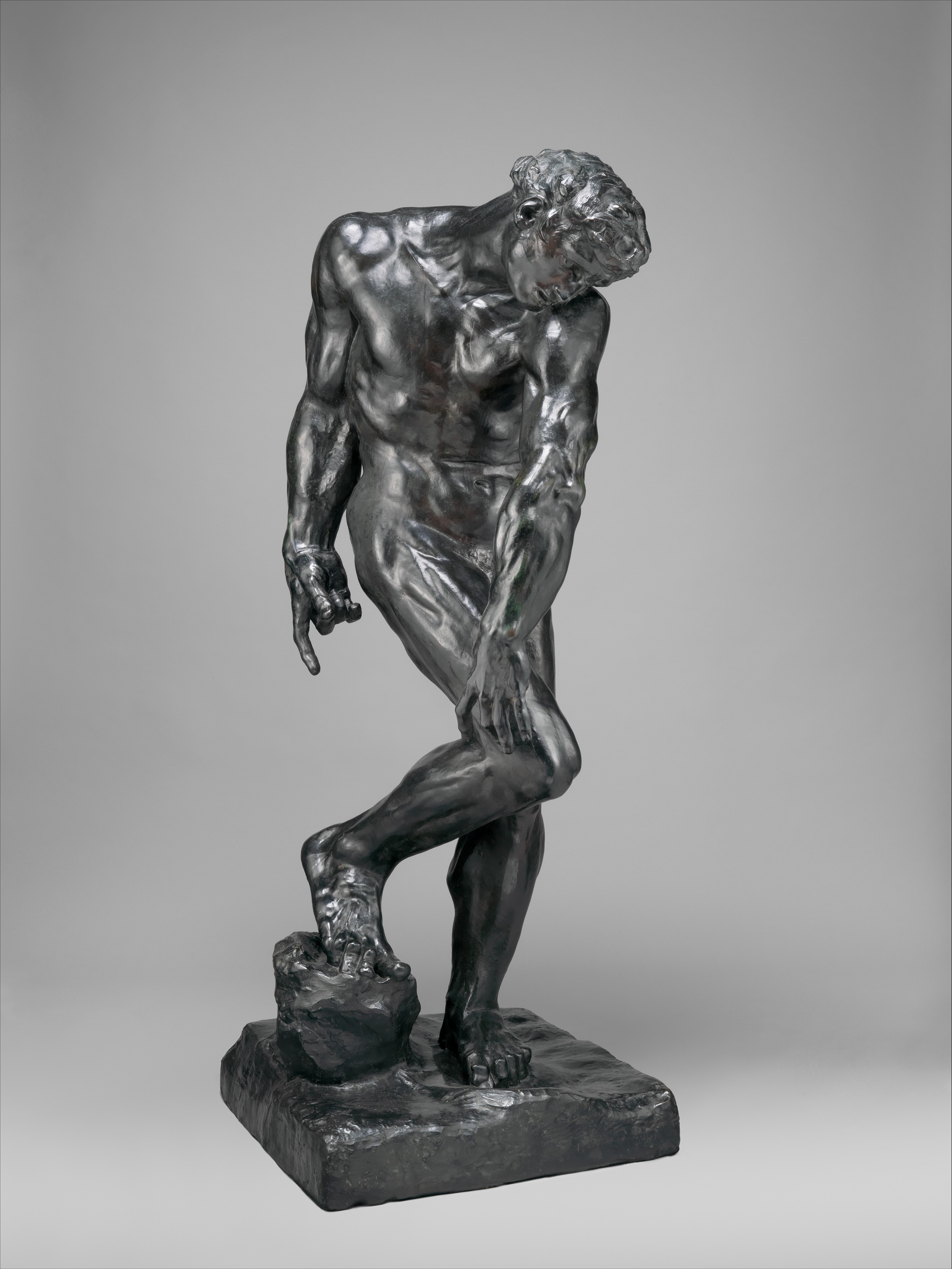
Academic sculpture often treated surface as the last veil between an idea and the world: smooth enough to make labor disappear. Rodin reversed that hierarchy. In Adam, ridges, depressions, and abrupt transitions keep the history of modeling present inside the bronze.
Light cannot settle evenly across this body. It catches on projections and falls into small shadows, making the figure seem to change as the viewer moves. The sculpture’s emotional instability is therefore also an optical event.
Model, cast, repeat
Rodin’s studio practice depended on translation. Clay became plaster; plaster could be enlarged, fragmented, recombined, carved in marble, or cast in bronze. Rather than diminishing authorship, these stages became part of his sculptural vocabulary.
That is why the work feels unexpectedly contemporary. It does not pretend to be a singular immaculate object. It presents sculpture as a chain of decisions, copies, changes of scale, and material negotiations.