Technique
From wax to bronze: one sculpture, several disappearances
Lost-wax casting turns a temporary model into a durable metal body through molds, heat, channels, and calculated absence.
14 July 2026 · 7 min read
Why the wax must be lost
A wax version of the sculpture is surrounded by a heat-resistant investment. Channels attached to the model will later carry wax out, gases away, and molten alloy inward. When the mold is fired, the wax disappears and leaves a precise cavity.
Bronze is then poured into that negative space. The transformation sounds direct, but temperature, wall thickness, venting, and the behavior of the alloy make every successful cast a technical achievement.
The work after the pour
A raw casting is not finished sculpture. Foundry workers remove channels, repair small faults, join separately cast sections, and chase the surface so transitions appear intentional. Chemical patination then produces color while accelerating or controlling reactions on the metal.
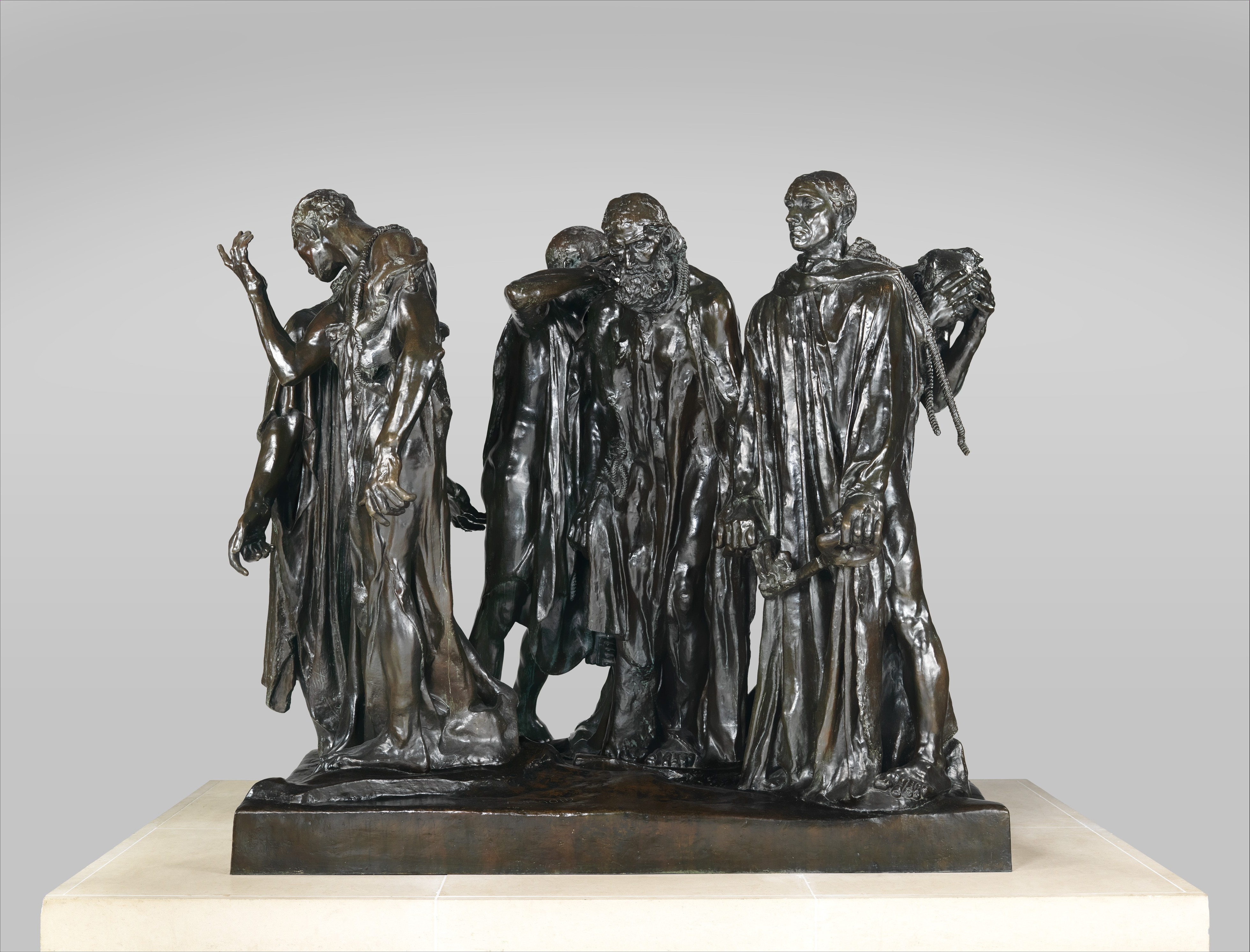
Large works such as The Burghers of Calais emerge from collaboration among artist, modelers, mold makers, founders, chasers, and patineurs. Understanding that collective labor changes how we see the apparent unity of bronze.