Artist story
Edmonia Lewis: carving a place in Rome
A transatlantic career in marble joined Neoclassical training to questions of freedom, literature, and self-definition.
18 July 2026 · 5 min read
An international studio
Rome offered nineteenth-century sculptors proximity to ancient collections, skilled stone workers, affordable studios, and an international stream of patrons. For Edmonia Lewis, it also offered a degree of professional independence unavailable in the United States.
Lewis joined a community of expatriate women sculptors but cultivated a distinct public identity. Accounts repeatedly noted that she performed much of her own carving, countering assumptions that the physical realization of a marble belonged to anonymous assistants.
Reading Minnehaha
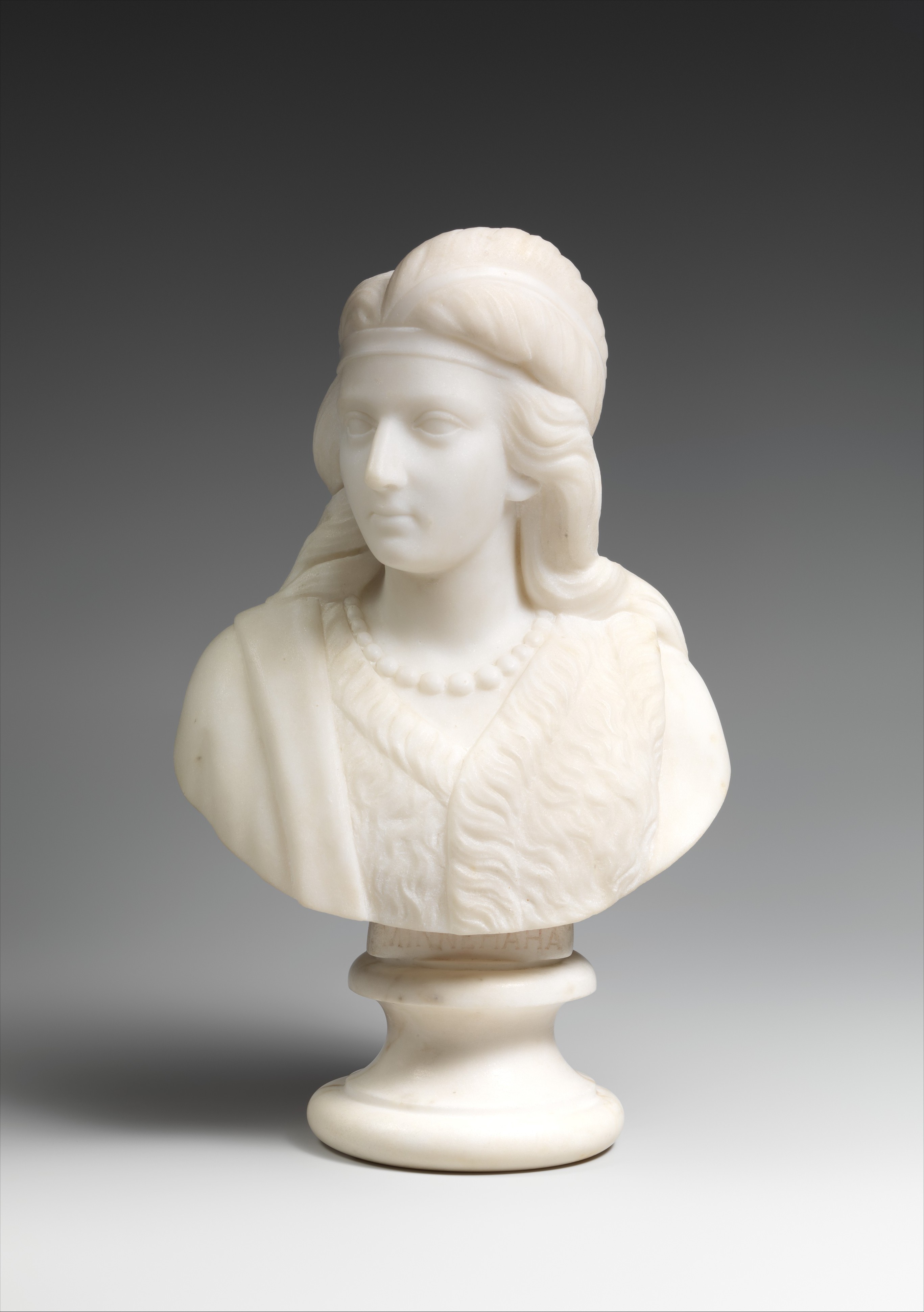
Minnehaha comes from Henry Wadsworth Longfellow’s enormously popular poem The Song of Hiawatha. Lewis’s bust adopts the clean profile and polished marble of Neoclassicism while choosing a subject through which nineteenth-century audiences imagined Indigenous identity.
The work now asks us to hold several histories together: Lewis’s own Ojibwe heritage, the conventions of a European sculptural language, and the literary stereotypes through which her patrons may have approached the figure.